Keeping a restaurant clean is essential for safety, health, and customer satisfaction. In a busy city like Chicago, restaurant owners must follow strict cleaning rules to avoid fines, health inspection failures, and negative reviews.
Even experienced chefs and managers sometimes make simple mistakes that hurt kitchen hygiene. By identifying these common cleaning mistakes, you can prevent them and run a safer, more efficient restaurant.
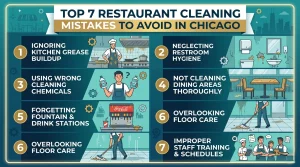
Here are the top 7 restaurant cleaning mistakes in Chicago and how to avoid them.
1. Ignoring Hidden Areas In Resturant Cleaning
Many restaurant owners focus on visible surfaces like counters and floors but forget hidden areas. Areas behind and under heavy equipment, vents, and corners can collect grease, dust, and food particles.
Why it matters:
Hidden dirt becomes a breeding ground for bacteria and pests. Inspectors notice it during health inspections.
How to fix it:
Move equipment regularly for deep cleaning
Clean behind shelves, refrigerators, ovens, and stoves
Use brushes or specialized tools for vents and corners
2. Not Cleaning Exhaust Hoods and Ducts Properly
Exhaust hoods and ducts remove smoke and grease from kitchens, but they are often neglected. Grease buildup in these areas is a major fire hazard and health concern.
Why it matters:
A dirty hood can cause fires and inspection failures. It also reduces air quality in the kitchen.
How to fix it:
Clean hoods and ducts regularly (monthly or as needed)
Hire professional cleaning services for deep duct cleaning
Check filters and replace them if dirty
3. Using the Wrong Cleaning Chemicals
Many staff members use cheap or inappropriate chemicals to save money. This can leave surfaces dirty or unsafe. Some chemicals can even react badly with food areas.
Why it matters:
Incorrect chemicals may not kill bacteria or remove grease. It can also leave residues that contaminate food.
How to fix it:
Use commercial-grade, food-safe disinfectants
Follow manufacturer instructions
Train staff to use the right cleaning products
4. Skipping Floors and Drains
Floors and drains often get overlooked during cleaning. Spilled food, grease, and liquids accumulate over time, creating slippery surfaces and unpleasant odors.
Why it matters:
Dirty floors can cause accidents and attract pests. Clogged drains can lead to water damage or bad smells.
How to fix it:
Sweep and mop floors daily
Clean drains weekly to remove debris
Use degreasers in high-traffic areas
5. Poor Staff Training and Responsibility
Even with the best cleaning schedule, mistakes happen if staff is not trained properly. Staff may skip tasks or clean incorrectly, leaving areas unsanitized.
Why it matters:
Inconsistent cleaning increases the risk of contamination and inspection failures.
How to fix it:
Provide clear cleaning instructions
Assign specific responsibilities to each staff member
Conduct regular training sessions
Monitor staff performance
6. Ignoring Restrooms and Dining Areas
Some restaurants focus only on the kitchen and forget dining spaces and restrooms. Dirty restrooms and tables can negatively impact customer experience.
Why it matters:
Customers notice unclean areas immediately. It affects reviews and repeat business.
How to fix it:
Clean tables, chairs, and counters after each customer
Sweep and mop dining floors regularly
Disinfect restrooms daily and refill supplies
Maintain hand sanitizers and trash bins
7. Skipping Professional Cleaning Services
Some restaurant owners try to do everything themselves to save costs. While daily cleaning is possible in-house, deep cleaning tasks like exhaust systems, hoods, and vents often require professional help.
Why it matters:
Ignoring deep cleaning can lead to fire hazards, health code violations, and long-term equipment damage.
How to fix it:
Hire professional cleaners for exhaust, duct, and hood maintenance
Schedule monthly inspections for all deep cleaning tasks
Combine in-house daily cleaning with professional services
Avoid Mistakes With Professional Support
If managing all cleaning tasks feels overwhelming, Chicago restaurants often rely on Windy City Restaurant Cleaning. Their team handles deep kitchen cleaning, hood maintenance, and full sanitation, ensuring your restaurant passes inspections and stays safe for staff and customers.
Final Words
Avoiding these common restaurant cleaning mistakes is key to running a safe, hygienic, and successful restaurant in Chicago.
By focusing on hidden areas, proper chemicals, staff training, and professional services, you can maintain a clean kitchen, pass inspections, and create a better experience for your customers.
A clean restaurant is a safe restaurant—and a successful one.
Chicago Health Inspection Tips
Passing a health inspection in Chicago requires attention to detail.
One of the best things you can do is maintain cleaning logs. This shows inspectors that you are serious about hygiene. Staff training is also very important. Employees should know how to clean properly and follow safety rules.
Always use the right cleaning chemicals and store them safely. Food items should be labeled clearly with dates. Temperature control is also critical, as improper temperatures can cause food to spoil.
Inspectors check everything carefully, so it is better to stay prepared at all times.