Running a commercial kitchen is a big responsibility. Cleanliness is not just about appearance—it is about safety, hygiene, and following strict health rules. In a busy city like Chicago, restaurants must keep their kitchens clean at all times to avoid fines and pass health inspections.
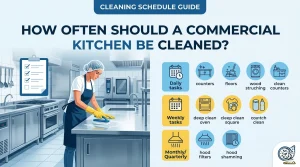
Many restaurant owners ask the same question: how often should a commercial kitchen be cleaned? The simple answer is that cleaning should be done regularly at different levels. Some tasks must be done every day, while others should be done weekly or as deep cleaning.
In this guide, you will learn how often different areas of your kitchen should be cleaned and why it is important for your business.
Why Cleaning Frequency Matters?
Cleaning your kitchen regularly helps prevent bacteria, grease buildup, and food contamination. If cleaning is ignored, it can lead to serious problems like food poisoning, bad smells, and pest infestations.
Health inspectors in Chicago check kitchens carefully. They look at cleanliness, food storage, and equipment condition. If your cleaning schedule is not proper, you can fail inspections and lose customer trust.
Regular cleaning also improves efficiency. When everything is clean and organized, your staff can work faster and more safely.
Commercial Kitchen Cleaning Tasks
Clean and sanitize countertops and food preparation areas after use
Wash and disinfect cutting boards regularly to prevent cross-contamination
Clean cooking equipment such as grills, ovens, and fryers to remove grease and food particles
Wipe refrigerator doors, handles, and interior shelves
Sweep and mop floors to remove dirt, oil, and food waste
Empty trash bins regularly to avoid bad odors and pests
Clean behind and under heavy equipment like refrigerators and ovens
Wash walls and tiles to remove stains and grease buildup
Deep clean refrigerators and freezers by removing items and cleaning shelves
Organize stored food properly after cleaning
Clean drains to prevent blockages and unpleasant smells
Sanitize trash bins to remove bacteria
Clean exhaust systems including hoods and ducts to remove grease buildup
Deep clean ovens and fryers to maintain performance
Clean ceilings, vents, and light fixtures to remove dust
Inspect plumbing and fix any leaks
Check for pests like insects and rodents and take action if needed
What Happens If You Don’t Clean Regularly?
If a commercial kitchen is not cleaned properly, it can lead to serious consequences.
Food contamination is one of the biggest risks. This can make customers sick and damage your reputation. Grease buildup can also cause fire hazards, especially in exhaust systems.
Pests like rats and insects are attracted to dirty kitchens. Once they enter, it becomes difficult to control them.
You may also fail health inspections, which can result in fines or closure.
Chicago Health Inspection Requirements
In Chicago, restaurants must follow strict health codes. Inspectors check cleanliness, food safety, and equipment condition.
To stay compliant, you should:
Maintain cleaning logs
Train your staff regularly
Use approved cleaning chemicals
Store food properly
Keep equipment clean and functional
Being prepared helps you avoid problems during inspections.
Tools That Make Cleaning Easier
Using the right tools can save time and improve results.Microfiber cloths are effective for cleaning surfaces. Disinfectants help kill bacteria. Floor scrubbers make it easier to clean large areas.Protective gear like gloves keeps your staff safe. Proper tools make cleaning faster and more efficient.
Professional Kitchen Cleaning in Chicago
If managing cleaning tasks becomes difficult, hiring professionals can be a smart choice. Many restaurant owners trust services like Windy City Restaurant Cleaning because they provide expert deep cleaning for commercial kitchens, including hoods, ducts, and equipment. This helps restaurants stay compliant with Chicago health standards and reduces stress for owners.
Final Words
Cleaning a commercial kitchen is not a one-time task. It requires daily effort, weekly maintenance, and monthly deep cleaning. By following a proper cleaning schedule, you can keep your kitchen safe, pass inspections, and provide a better experience for your customers. A clean kitchen is the foundation of a successful restaurant.